


SOLUTION DETAILS
Ultrasonic or Rotor-Stator Homogenizer: Which Is Right for Your Sample?
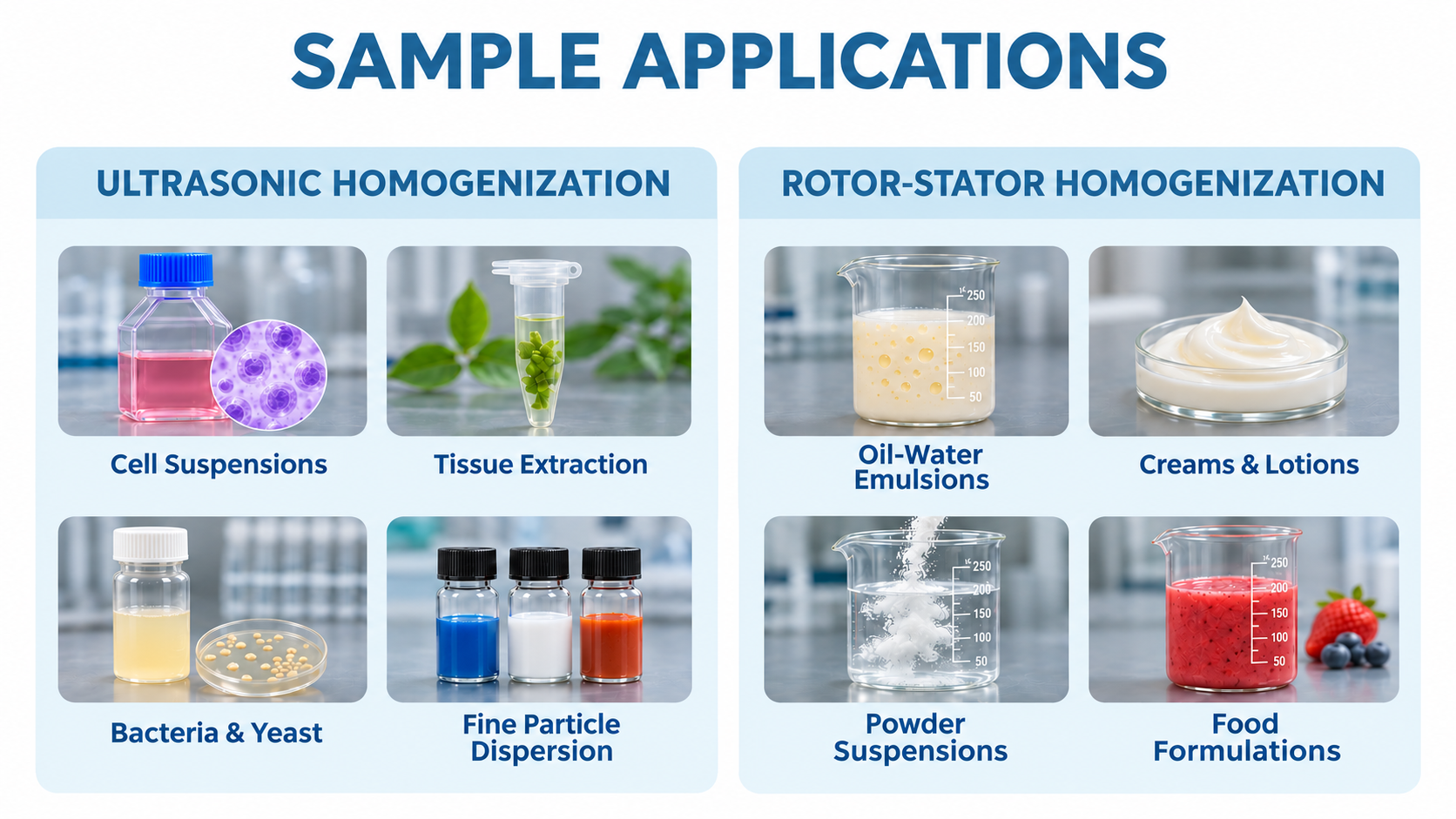
Choosing a homogenizer is easier when you start with the sample and the result you need. Ultrasonic processing is often used for cell disruption and fine dispersion, while rotor-stator equipment is commonly used to prepare suspensions, disperse solids and develop emulsions.
How do the two methods work?
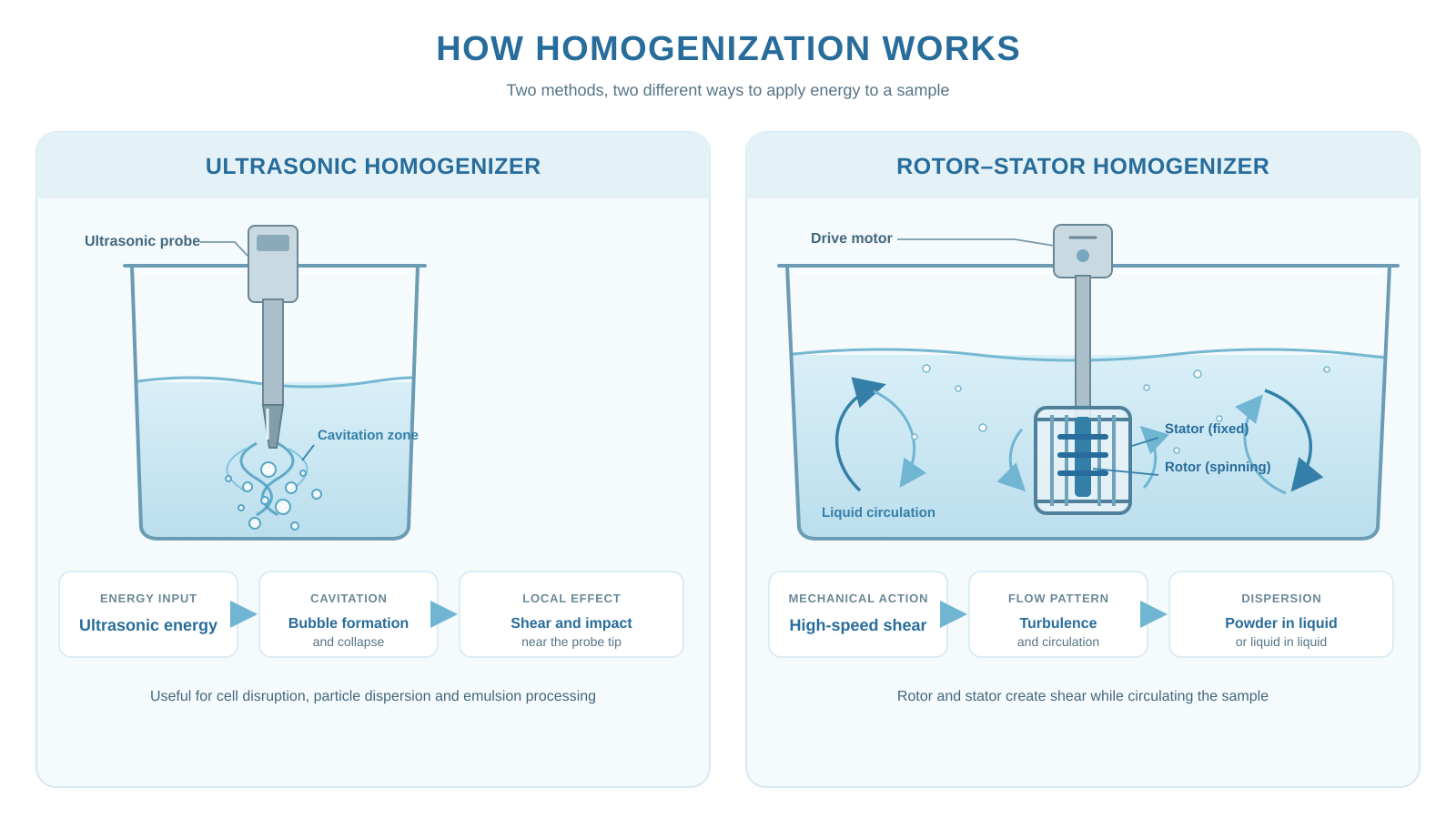
An ultrasonic homogenizer transfers acoustic energy into a liquid through a probe. Cavitation bubbles form and collapse, creating localized shear and impact forces that can help disrupt cells or disperse particles.
A rotor-stator homogenizer uses a fast-spinning rotor within a stationary stator. The narrow working gap creates mechanical shear and turbulence, while circulation helps move material through the processing zone.
What does each method do well?
Ultrasonic processing concentrates energy near the probe and is often selected for cell disruption, tissue processing and fine-particle dispersion. Rotor-stator processing combines mechanical shear with bulk circulation, making it useful for solid-liquid mixing, suspensions and emulsions.
Neither method is automatically more uniform for every sample. Results depend on viscosity, batch volume, probe or head configuration, processing time and energy input. For a defined outcome, assess the sample using measures such as particle size, stability or cell disruption rate.
How should the probe or head be positioned?
Ultrasonic homogenizer
- Select a probe diameter suited to the sample volume and secure it firmly.
- Keep the probe 1–2 cm below the liquid surface.
- Keep the probe end face 1–3 cm above the vessel bottom.
- Do not let the probe touch the vessel wall or bottom.
- Start with a lower power setting and adjust while observing the sample.
- For heat-sensitive samples, use intermittent processing and cooling as needed.
The vessel must contain enough liquid to maintain both clearances. The mini-300 product information specifies a continuous ultrasonic time of less than 40 minutes; follow the operating limit for the model in use.
Rotor-stator homogenizer
- Fully immerse the stator before starting. The liquid level should be at least 5 mm above the top of the stator.
- Keep the stator base at least 10 mm (1 cm) above the vessel bottom.
- Position the head slightly off-center to encourage circulation, without letting it touch the vessel.
- Start at low speed and increase gradually while observing the flow.
- Set speed and processing time according to the sample viscosity, volume and target result.
Which configuration suits your sample?
| Sample or processing goal | Recommended setup | Working volume | Viscosity reference |
|---|---|---|---|
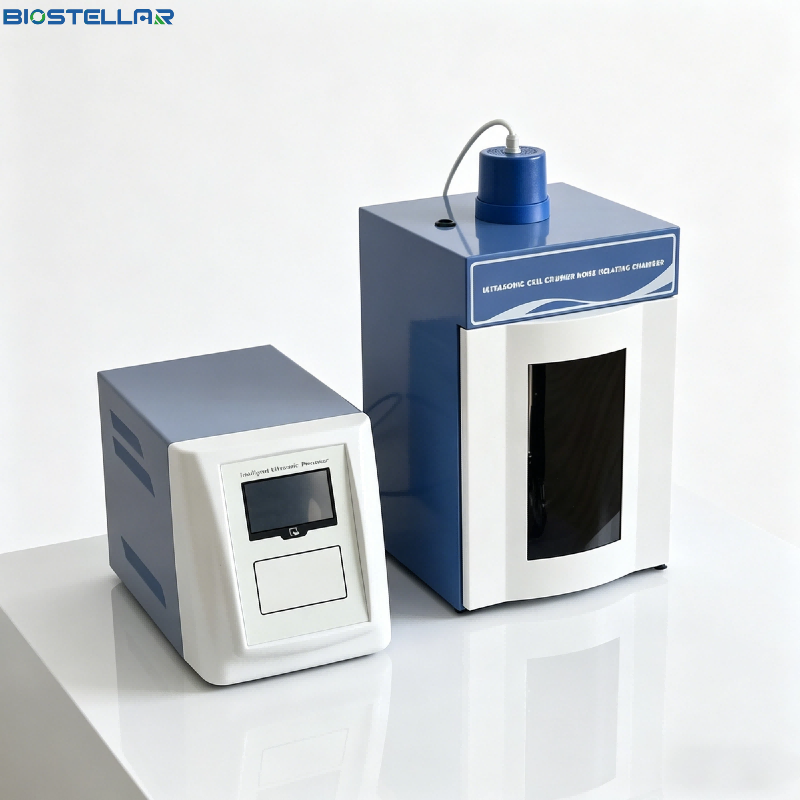
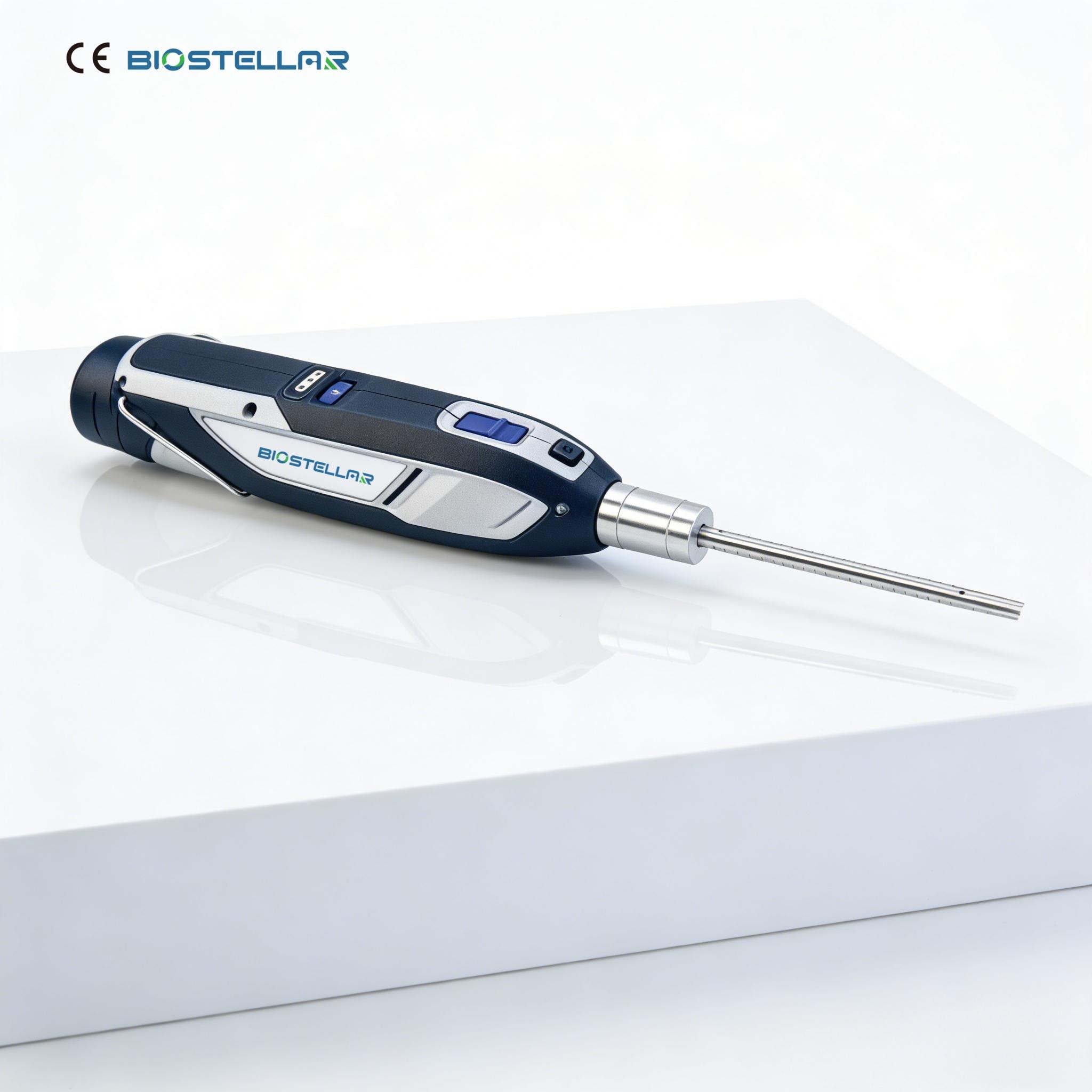
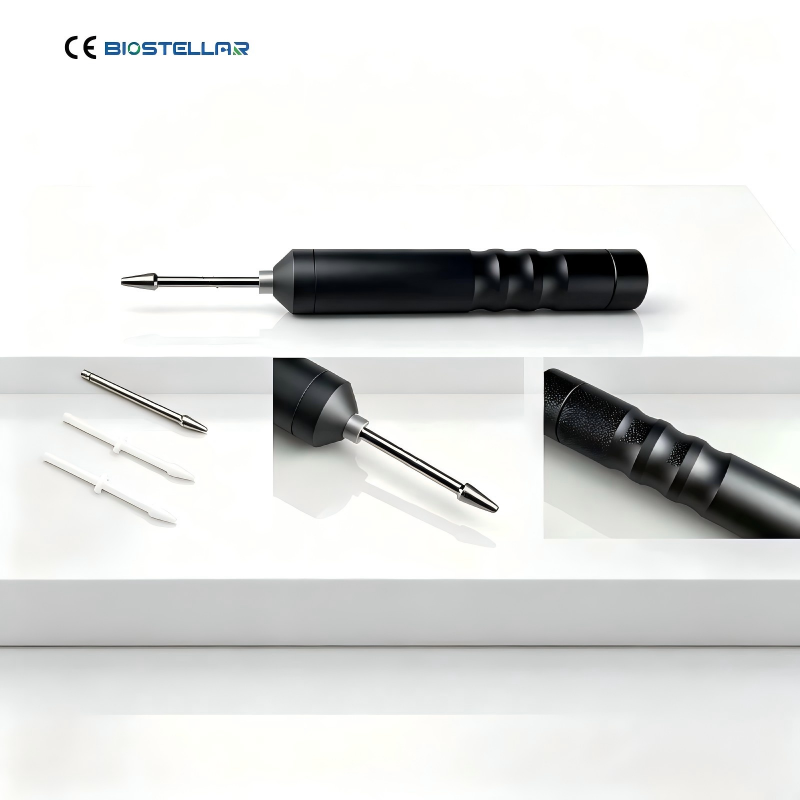
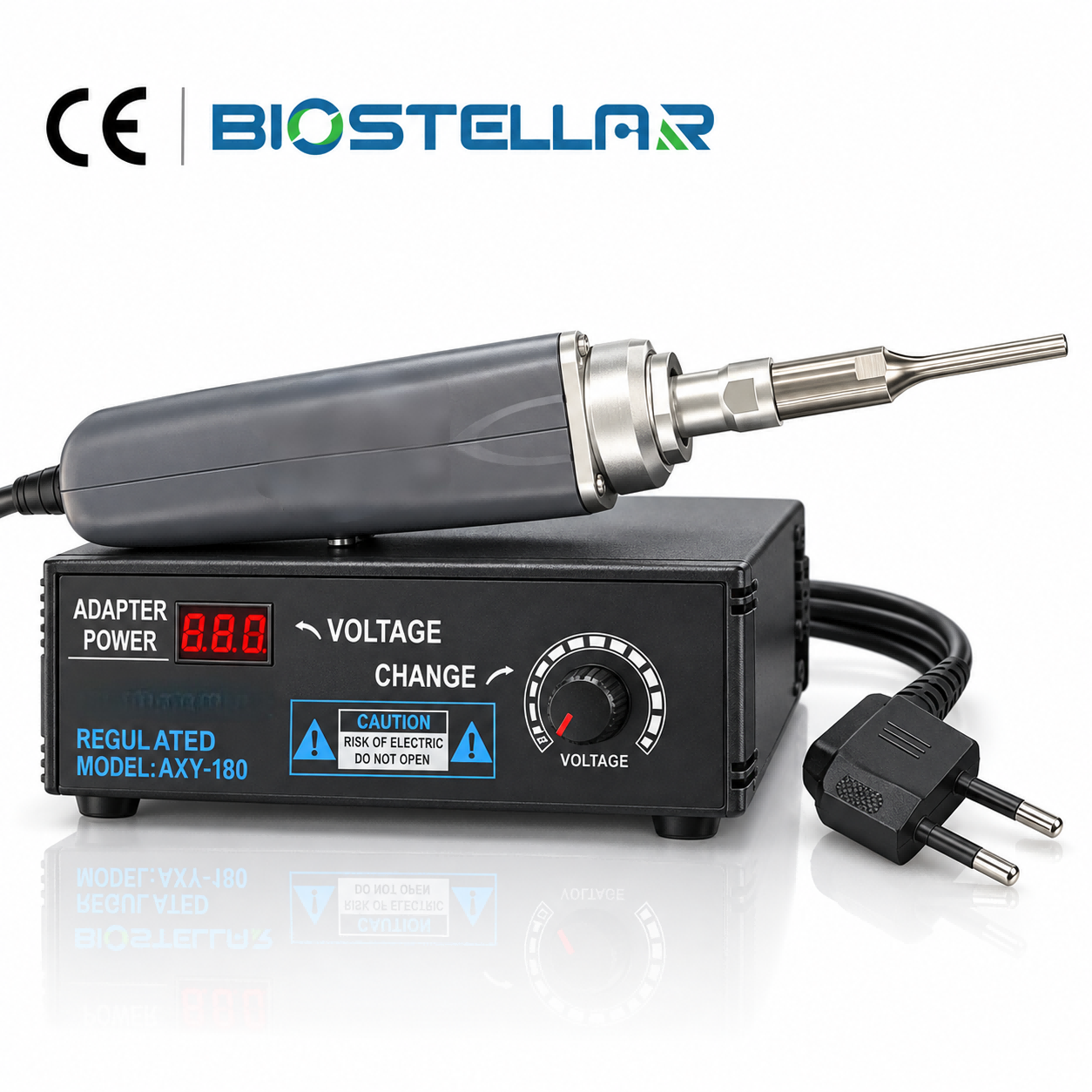
| Cell disruption; bacterial or yeast samples | mini-300 handheld ultrasonic cell disruptor; BSD series for larger sample volumes | mini-300: 0.1–300 mL; BSD series: about 0.2–2000 mL, depending on model | A maximum viscosity is not listed for mini-300. For viscous samples with a BSD system, pretreat the sample first; a rotor-stator homogenizer can be used for preliminary homogenization before sonication. |
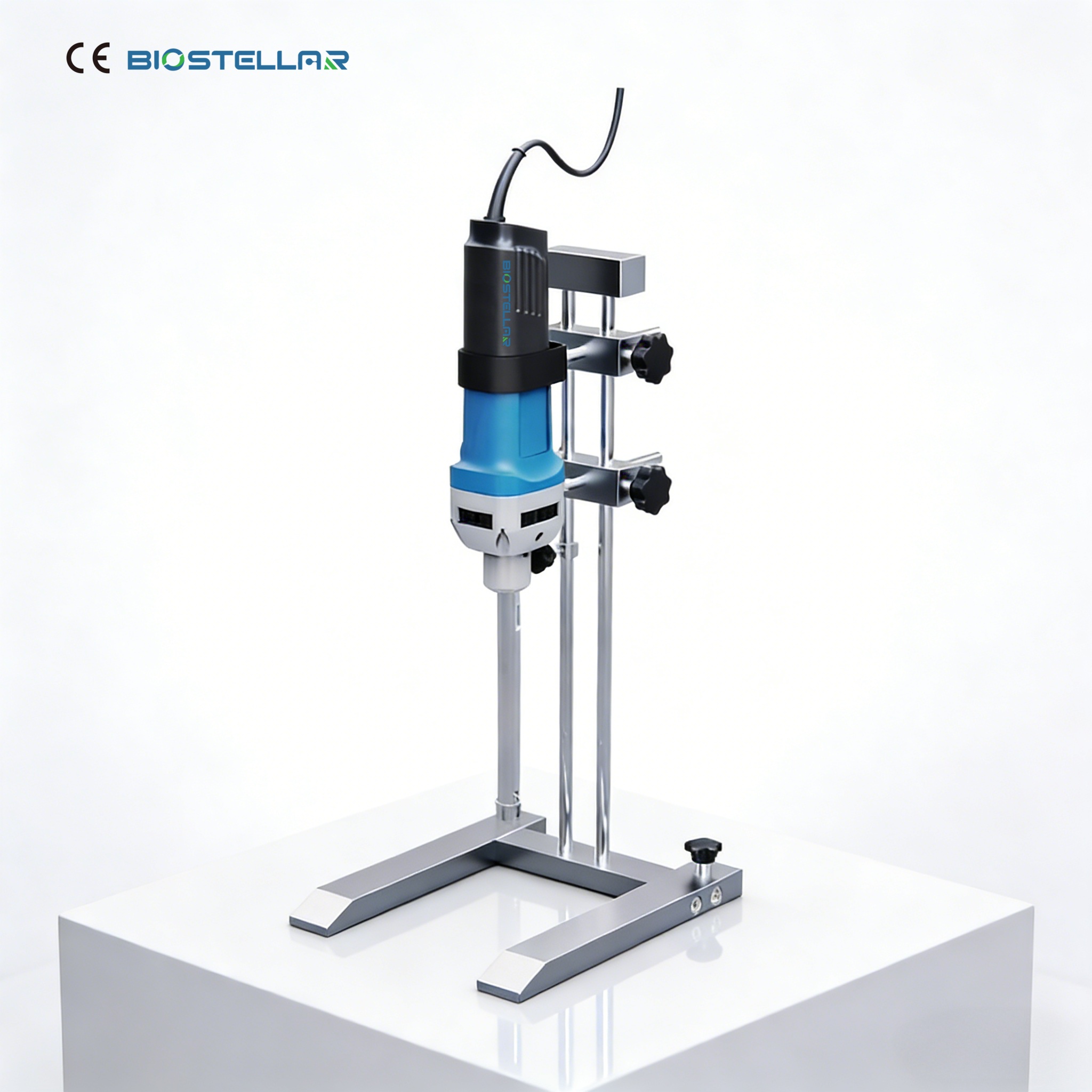
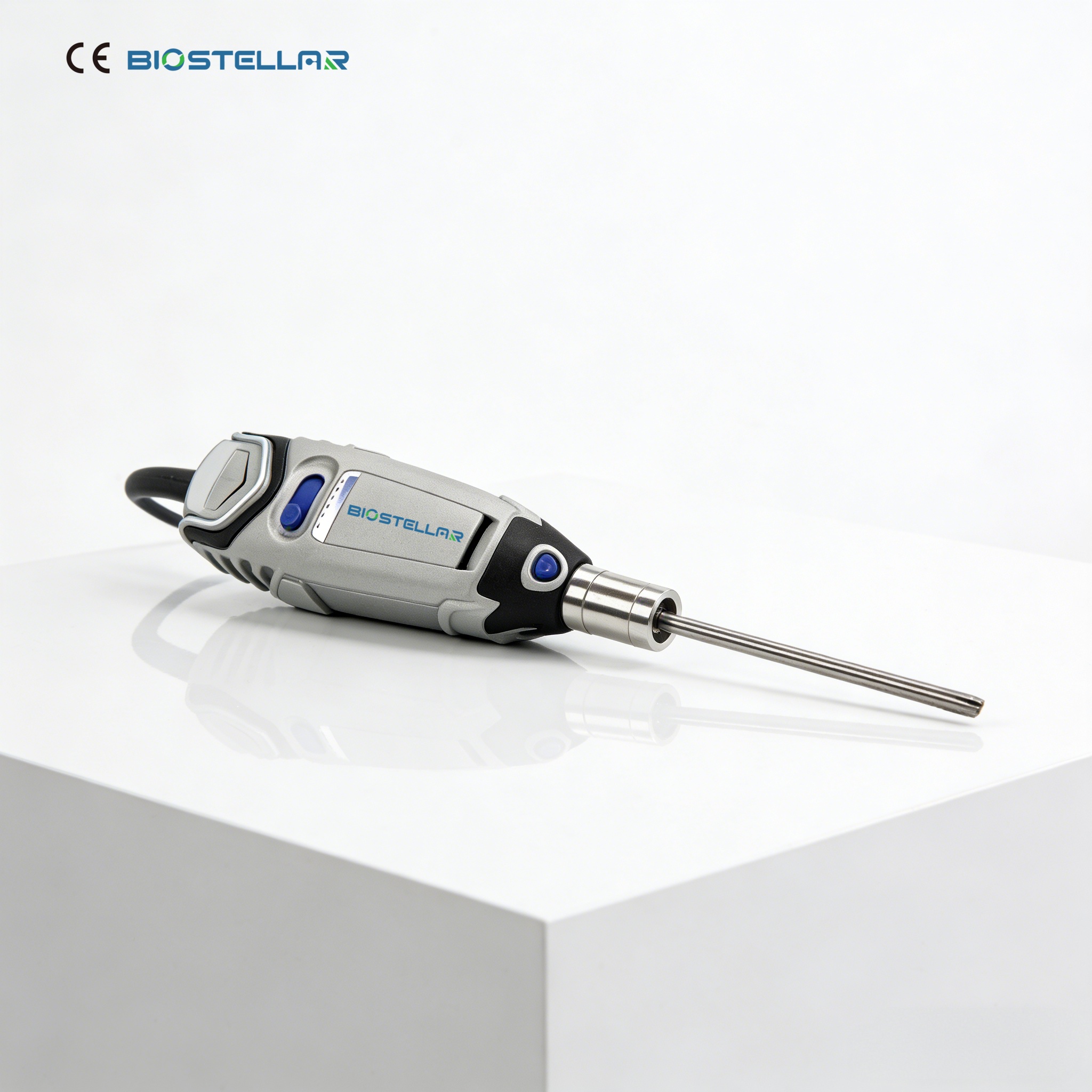
| Animal or plant tissue and biological samples | D-160-10 handheld homogenizer with a dispersing shaft matched to the sample volume | About 0.1–250 mL | Maximum viscosity listed in the equipment specifications: 5,000 mPa·s |
| Dispersing powders or particles into liquids; preparing suspensions | D-500 with S20C / SR20 | 10–5000 mL | D-500 maximum viscosity listed in the equipment specifications: 10,000 mPa·s |
| Oil-water mixing, emulsions, creams or lotion development | D-500 with S20F / ER20 | 10–5000 mL | D-500 maximum viscosity listed in the equipment specifications: 10,000 mPa·s |
| Small-volume solid-liquid mixing | D-500 with SS5C / SR5 | 1–50 mL | D-500 maximum viscosity listed in the equipment specifications: 10,000 mPa·s |
The mini-300 offers Ø2, Ø6 and Ø8 mm horns. Confirm the configuration against the sample, vessel size and required outcome before processing.
Need help matching a homogenizer to your sample? Contact Amy for model and setup guidance.
WhatsApp / WeChat: +86 156 6233 7510

Share



SEND INQUIRY

Mailbox
stellawang@biostellarlab.cn

+86-15666095066

+86-15666095066

Adress
HanYu Gold Valley.The Intersection Of 10 Run
Road And South ShunHua Road High-Tech
Zone.JiNan Shandong Province CHINA