


SOLUTION DETAILS
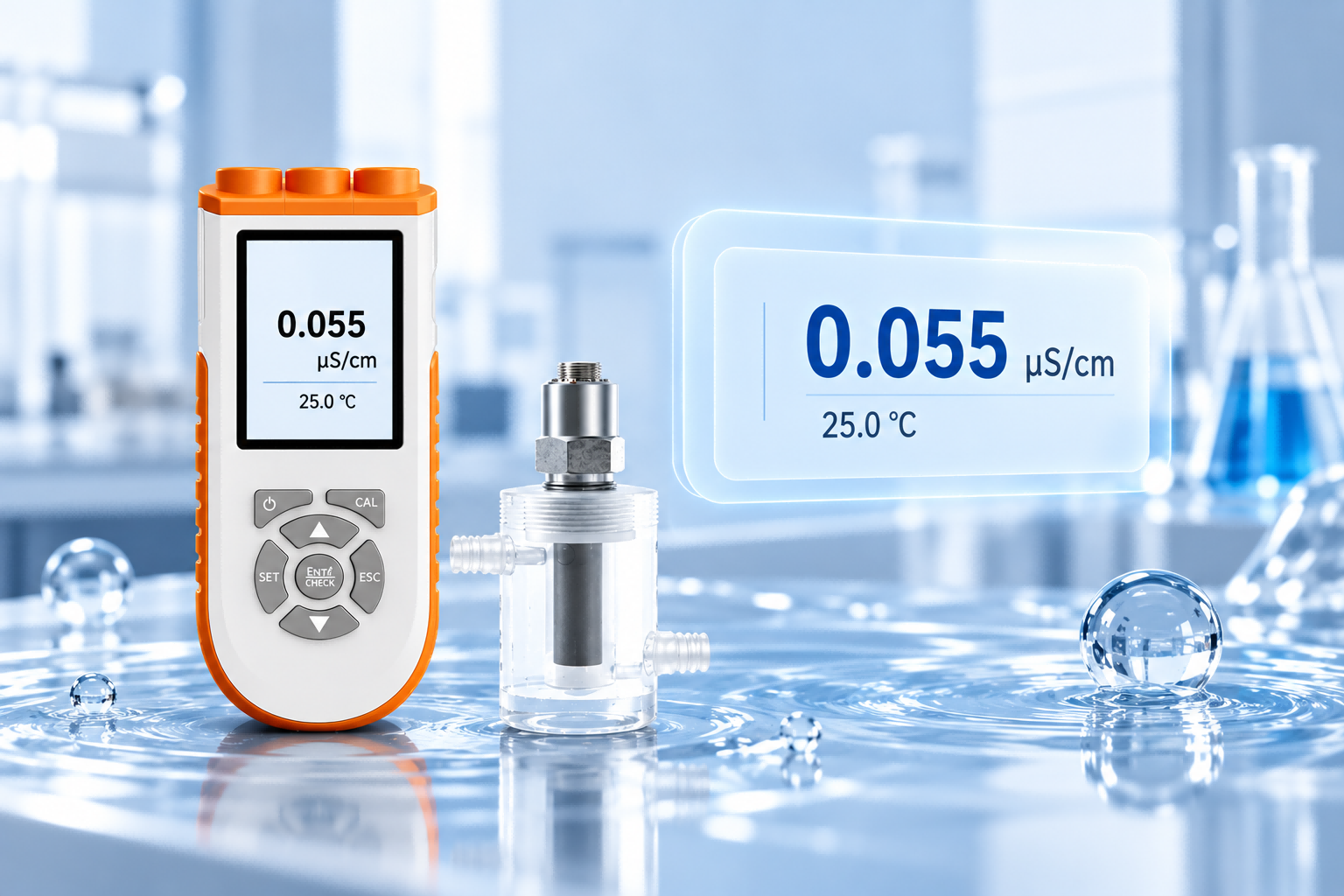
A More Practical Way to Manage Low-Conductivity Testing: BIOSTELLAR EC10 for Pure and Ultrapure Water Workflows
Low-conductivity work is not only about reaching a small number on the display. In day-to-day laboratories, operators also need a readable interface, repeatable setup, practical calibration, and a way to keep measurement records organized. BIOSTELLAR EC10 with the DDJS-0.01VTK low-conductivity electrode is configured around that complete workflow.
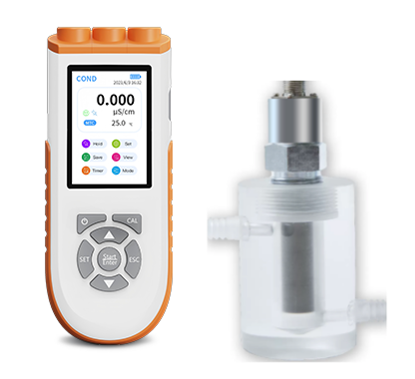
The 3.5-inch TFT color display uses a visually clean layout that makes readings and menu items easy to distinguish. A redesigned UI keeps common functions close at hand, helping users move between measurement, parameter setup and stored results without a complicated operating sequence.
Designed Around the Daily Measurement Workflow
Measurement values, status information and menu options are presented in a clear color layout designed for straightforward routine operation.
These functions support repeatable workflows when laboratories need measurements at defined intervals or want to lock a result before recording it.
The larger local data capacity helps reduce frequent manual transcription and makes routine result review more convenient.
The meter supports electrode-related calibration and conductivity standard-solution calibration, allowing laboratories to build a defined calibration routine around their own SOPs.
A rechargeable lithium battery, low-power management and power-off protection support portable use. Type-C charging simplifies cable management in laboratories where USB-C is already widely used.
The supplied specification lists IP57 protection, useful for routine environments where dust or incidental water exposure may occur when the instrument is used and maintained correctly.
Objective Parameter Comparison
The comparison below uses the reference configuration supplied for this project. The other product is intentionally anonymized as “A Major International Brand Solution”. It is a parameter reference only, not a claim of superiority or equivalence. Verify current datasheets and application requirements before procurement.
| Parameter | BIOSTELLAR EC10 | A Major International Brand Solution |
| Display | 3.5-inch TFT color display | Graphic LCD display |
| Conductivity range | 0–2000.0 mS/cm | 0.010 µS/cm–1000 mS/cm |
| Temperature range | -10.0 to 135.0 °C | -5 °C to 105 °C |
| Resolution | 0.001–1 | 0.001–1 |
| Accuracy | ±0.5% F.S. ±1 digit | ±0.5% |
| Data storage | Up to 3000 sets | Up to 2000 readings |
| Data / operation | Timed measurement, parameter setting, data hold; PC data-management functions | Password protection, GLP and user-management functions in the reference configuration |
| Power / charging | Rechargeable lithium battery; Type-C / USB | USB interface; 4 × 1.5 V replaceable batteries in the reference configuration |
Where EC10 Fits in the Laboratory
EC10 is suitable for conductivity-based work across several laboratory and process-support scenarios. The exact method should always be validated for the sample matrix and intended decision.
- Water-quality conductivity checks: Routine measurement of water samples and treatment-process changes.
- Pure and ultrapure water monitoring: Low-conductivity monitoring for pharmaceutical, semiconductor and water-treatment workflows.
- Salinity assessment: Conductivity-based salinity estimation where an appropriate relationship or method has been established.
- Ionic concentration evaluation: Useful as an indirect indicator when the sample matrix and calibration relationship are known.
- Laboratory solution analysis: General conductivity testing of aqueous laboratory solutions within the instrument range.
- Food and beverage process checks: Conductivity-based monitoring of suitable water, cleaning solutions or product streams after method validation.
Typical Users and the Practical Value They Look For
- Pharmaceutical companies: Structured water-testing workflows, calibration records and routine data handling.
- Semiconductor companies: Monitoring low-ionic-content process and rinse water.
- Water-treatment companies: Conductivity checks across RO, DI and other treatment stages.
- Food and beverage companies: Water-system, cleaning-solution and suitable process-concentration checks.
- Environmental laboratories: Routine conductivity measurement as part of water-sample analysis.
- Research laboratories: Flexible conductivity work for pure water, solutions and method development.
At 25 °C, approximately 0.055 µS/cm is the theoretical conductivity of ideal ultrapure water. It is a useful scientific reference, but it is not a universal USP or EP pass/fail limit. Pharmaceutical laboratories should follow the applicable pharmacopeial procedure, temperature-related criteria, calibration requirements and internal SOPs.
For electrode selection, technical documents, certificates, quotation or project support, contact Amy.
Amy
WhatsApp / WeChat: +86 156 6233 7510
Email: amy@biostellarlab.com
Share



SEND INQUIRY

Mailbox
stellawang@biostellarlab.cn

+86-15666095066

+86-15666095066

Adress
HanYu Gold Valley.The Intersection Of 10 Run
Road And South ShunHua Road High-Tech
Zone.JiNan Shandong Province CHINA