


SOLUTION DETAILS
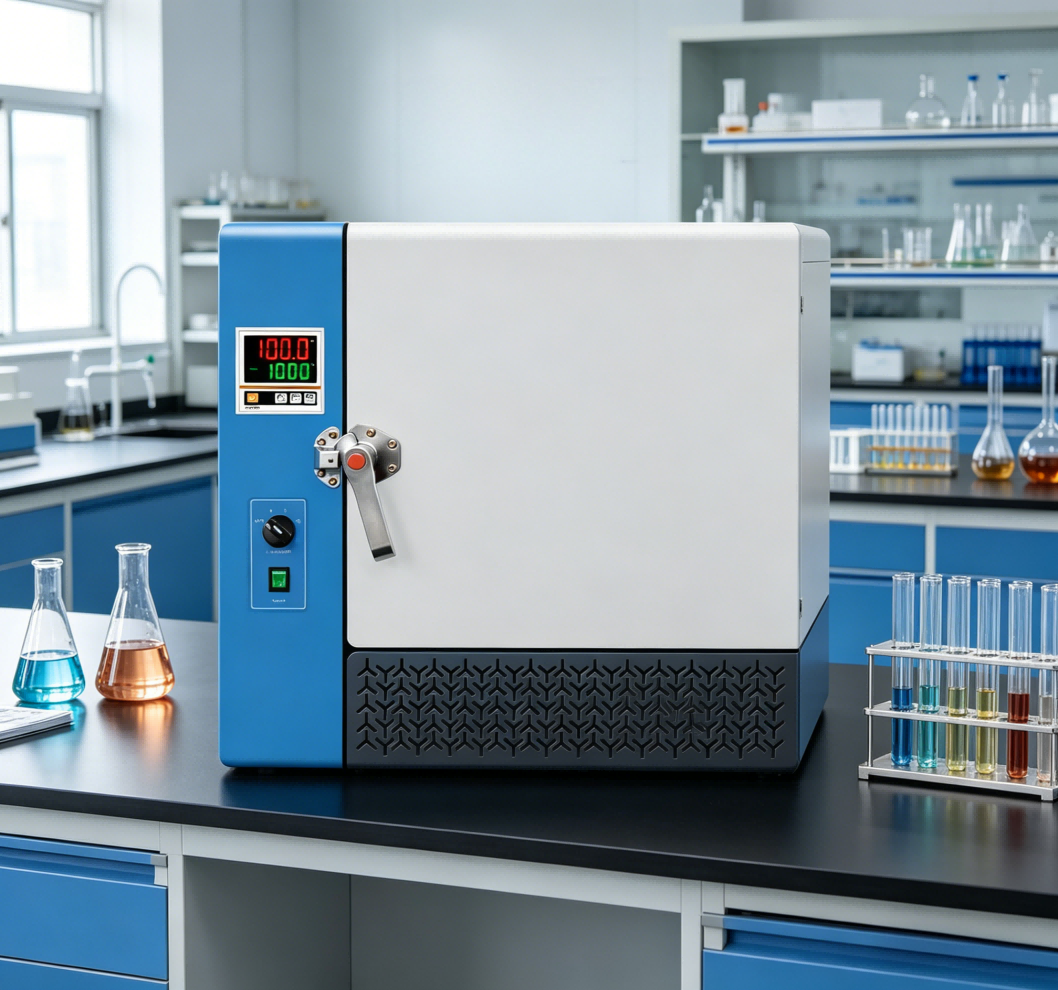
Key differences between natural convection and forced convection drying ovens in laboratories , and recommended models.
In daily laboratory operations, drying ovens are indispensable basic equipment, widely used in various scenarios such as sample drying, glassware sterilization, reagent curing, and material pretreatment . Choosing a drying oven that suits the experimental needs directly affects experimental efficiency, data accuracy, and sample safety. Natural convection drying ovens and forced convection drying ovens (also known as forced air drying ovens) are the two most commonly used types in laboratories. Although they have similar functions, they differ significantly in their working principles, performance, and applicable scenarios. Accurately distinguishing between their core differences is essential for the rational allocation of experimental resources and avoiding experimental errors or efficiency losses caused by improper equipment selection .
I. Core Differences
|
Difference Dimensions |
Natural convection drying oven |
Forced convection drying oven (blown air) |
|
Working principle |
Without a fan, it relies on natural circulation of rising hot air and sinking cold air for passive heat transfer. |
Built-in low-noise self-cooling fan and air duct, forced closed-loop air circulation, active heat transfer |
|
Temperature uniformity |
Poor temperature range, ±5℃~±10℃, prone to top heating and bottom cooling. |
Excellent performance, ±1℃~±2.5% (100℃ operating condition), no temperature dead zones, high precision. |
|
Drying efficiency |
The drying time is lower, only 1/2 to 1/5 of that of forced convection, and the drying cycle is longer. |
The temperature is higher, 2 to 5 times that of natural convection, resulting in a faster drying speed. |
|
Sample adaptability |
Suitable for lightweight powders, easily airborne, and fragile samples, with a gentle airflow. |
Suitable for precision samples, batch samples, and high-temperature samples, adaptable to various experimental scenarios. |
|
Energy consumption and noise |
Low energy consumption, no fan noise, and quiet operation. |
Energy consumption is slightly higher, but the low-noise fan operates, and the noise level is controllable within an acceptable range. |
Share



SEND INQUIRY

Mailbox
stellawang@biostellarlab.cn

+86-15666095066

+86-15666095066

Adress
HanYu Gold Valley.The Intersection Of 10 Run
Road And South ShunHua Road High-Tech
Zone.JiNan Shandong Province CHINA