0

+86 15666095066

SOLUTION DETAILS

{当前产品的产品关键词轮巡使用}
2026-04-13

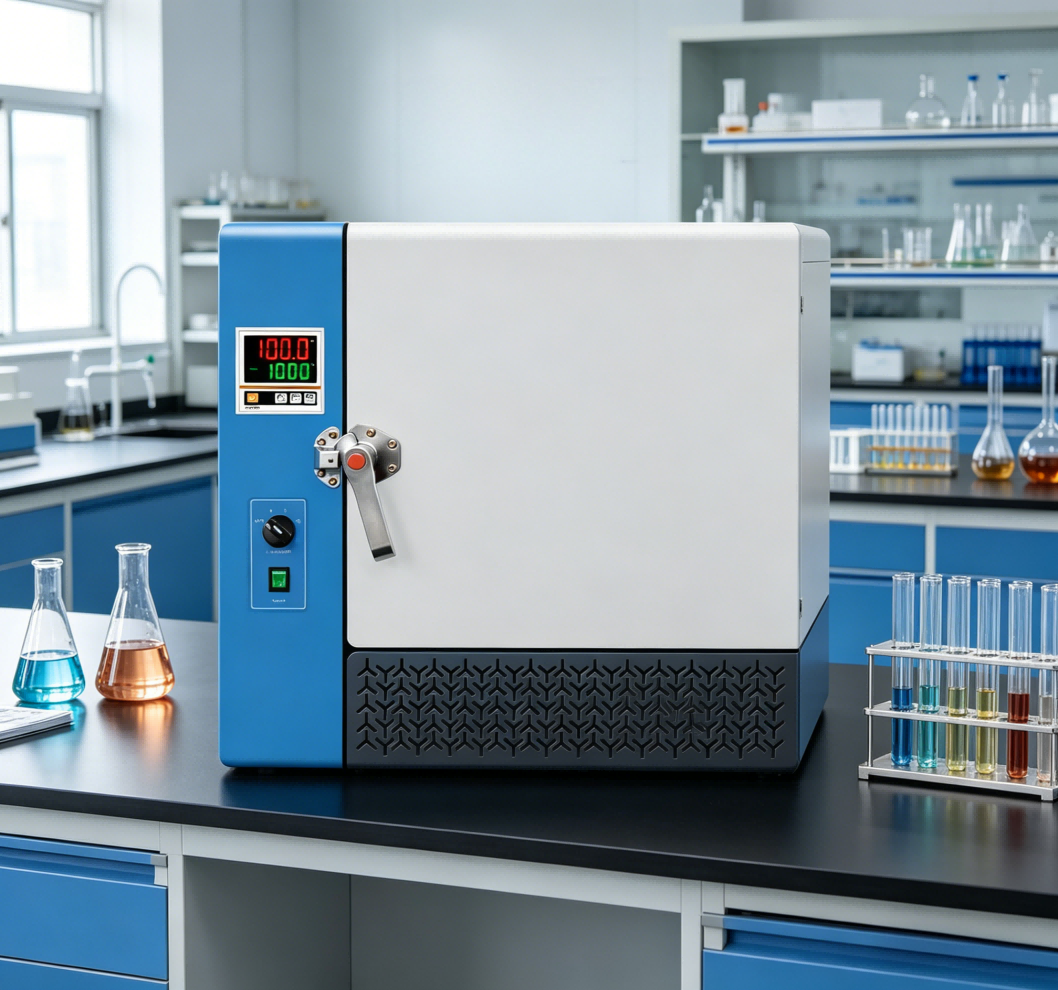
Key differences between natural convection and forced convection drying ovens in laboratories , and recommended models.

In daily laboratory operations, drying ovens are indispensable basic equipment, widely used in various scenarios such as sample drying, glassware sterilization, reagent curing, and material pretreatment . Choosing a drying oven that suits the experimental needs directly affects experimental efficiency, data accuracy, and sample safety. Natural convection drying ovens and forced convection drying ovens (also known as forced air drying ovens) are the two most commonly used types in laboratories. Although they have similar functions, they differ significantly in their working principles, performance, and applicable scenarios. Accurately distinguishing between their core differences is essential for the rational allocation of experimental resources and avoiding experimental errors or efficiency losses caused by improper equipment selection .

I. Core Differences

Difference Dimensions

Natural convection drying oven

Forced convection drying oven (blown air)

Working principle

Without a fan, it relies on natural circulation of rising hot air and sinking cold air for passive heat transfer.

Built-in low-noise self-cooling fan and air duct, forced closed-loop air circulation, active heat transfer

Temperature uniformity

Poor temperature range, ±5℃~±10℃, prone to top heating and bottom cooling.

Excellent performance, ±1℃~±2.5% (100℃ operating condition), no temperature dead zones, high precision.

Drying efficiency

The drying time is lower, only 1/2 to 1/5 of that of forced convection, and the drying cycle is longer.

The temperature is higher, 2 to 5 times that of natural convection, resulting in a faster drying speed.

Sample adaptability

Suitable for lightweight powders, easily airborne, and fragile samples, with a gentle airflow.

Suitable for precision samples, batch samples, and high-temperature samples, adaptable to various experimental scenarios.

Energy consumption and noise

Low energy consumption, no fan noise, and quiet operation.

Energy consumption is slightly higher, but the low-noise fan operates, and the noise level is controllable within an acceptable range.

II . Core Performance of the Laboratory

1. Temperature uniformity – a key guarantee for experimental accuracy

Forced convection drying ovens (blown-air drying ovens) utilize low-noise self-cooling fans for forced circulation, coupled with optimized baffle design, to effectively eliminate temperature dead zones and achieve extremely uniform temperature distribution within the oven. Temperature uniformity can reach ±1℃~±2.5% (at 100℃). This solves the problem of "hot at the top and cold at the bottom" issues common in natural convection drying ovens, which rely on natural airflow and have slow airflow speeds and limited circulation range. Forced convection drying ovens fully meet the stringent temperature accuracy requirements of precision experiments, pharmaceutical stability testing, material performance testing, and high-temperature pretreatment, ensuring the accuracy and repeatability of experimental data. Furthermore, the temperature recovers faster after the door is opened , effectively reducing the impact of environmental factors on the experiment. However, significant temperature fluctuations may occur inside the oven after the fan is turned off; therefore, strict adherence to experimental operating procedures is necessary.

2. Drying efficiency – a core factor influencing experimental efficiency

Forced convection drying ovens (blown-air drying ovens) utilize active airflow circulation to quickly remove moisture evaporated from the sample surface, significantly shortening drying time and achieving a drying efficiency 2 to 5 times that of natural convection . For scenarios such as batch sample drying, high-moisture sample processing, emergency sample drying , and high-temperature sample pretreatment, forced convection drying ovens can significantly improve laboratory work efficiency and reduce experimental waiting time, making them particularly suitable for laboratories with high efficiency requirements, such as those engaged in scientific research, batch testing, and industrial experiments.

3. Sample adaptability – adaptable to different experimental needs

Natural convection drying ovens have gentle airflow with no obvious turbulence, making them suitable for processing airflow-sensitive samples, such as lightweight powders, easily airborne samples, and fragile biological samples . This avoids sample damage or contamination caused by airflow impact.

Forced convection drying ovens (blown-air drying ovens) are available in high-temperature, desktop, and vertical models, offering wider applicability: the high-temperature model can handle heat-resistant samples ranging from 50-500℃, such as metals and ceramics; the desktop model is suitable for experiments with limited space and small quantities of precision samples; and the vertical model is suitable for floor-mounted applications and batch sample processing. Overall, they are suitable for processing samples requiring uniform temperature and drying speed, such as precision reagents, batches of particulate samples, glassware sterilization, material curing, drug metabolism experiments, and plastic curing. Their application scope covers most laboratory scenarios, meeting diverse experimental needs in research laboratories, pharmaceutical laboratories, and industrial testing laboratories. However, it should be noted that the strong airflow may disperse lightweight, easily airborne samples; such samples must be used with dedicated containers.

III. Forced Convection Drying Oven (Blower Air Drying Oven) Models and Suitable Scenarios

Type

Features

Temperature control range

Application scenarios

Recommended Model

capacity

High-temperature version

Wide temperature control, stainless steel inner liner, high temperature resistant

RT+50~500℃

Materials/Metallurgical Laboratory , Metals, Ceramics , High-Temperature Resistant Plastics: High-Temperature Drying, Curing, Pretreatment

BS-LHO-42D

42L

BS-LHO-72D

72L

BS-LHO-150D

150L

BS-LHO-200D

200L

BS-LHO-400D

400L

Table

Compact size, space-saving, and precise temperature control

RT+10~300℃

Precision drying for scientific research/testing/university laboratories , precision samples, biological reagents, electronic components , and glassware.

BS-LDO-9042

42L

BS-LDO-9070

70L

BS-LDO-9136

136L

BS-LDO-9210

210L

BS-LDO-9245

245L

Vertical

Vertical floor-standing, large capacity, and stable operation

RT+10~300℃

Large/medium/small laboratory, pharmaceutical/industrial testing , batch sample drying, sterilization, glassware drying

BS-LDOV-9045

45L

BS-LDOV-9072

72L

BS-LDOV-9125

125L

BS-LDOV-9210

210L

Share

No Data

SEND INQUIRY

Mailbox

stellawang@biostellarlab.cn

WeChat

+86-15666095066

Whatsapp

+86-15666095066

Adress

HanYu Gold Valley.The Intersection Of 10 Run
Road And South ShunHua Road High-Tech
Zone.JiNan Shandong Province CHINA